Apple hints at AI integration in chip design process
Apple is starting to use generative artificial intelligence (AI) to assist in designing the chips that power its devices. The company’s hardware chief, Johny Srouji, highlighted this shift during a recent speech in Belgium. Apple is exploring AI as a way to save time and reduce complexity in chip design—especially as chips grow increasingly advanced.
“Generative AI techniques have a high potential in getting more design work in less time, and it can be a huge productivity boost,” Srouji said. He was speaking while receiving an award from Imec, a global semiconductor research group.
He also emphasized Apple’s reliance on third-party software tools from electronic design automation (EDA)companies. Tools from firms like Synopsys and Cadence are essential to Apple’s chip development, and both companies are now working to infuse more AI into their platforms.
From the A4 to Vision Pro: A Design Timeline
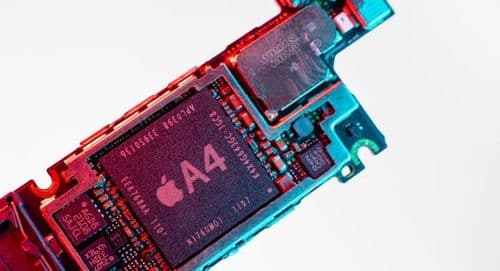
Srouji’s remarks offered a rare look inside Apple’s internal processes. He traced Apple’s journey beginning with the A4 chip in the iPhone 4, launched in 2010. Since then, Apple has developed a wide array of custom chips for products like the iPad, Apple Watch, Mac, and most recently, the Vision Pro headset.
While hardware is essential, Srouji stated that the real challenge lies in design complexity. Chip development now demands tight coordination between hardware and software. According to him, AI has the potential to make that integration faster and more reliable.
Why Apple Is Working with Broadcom on Server Chips
In late 2024, Apple quietly partnered with Broadcom to develop its first AI server chip, known internally as “Baltra.”This move supports Apple’s larger plan to handle more AI tasks on the backend, particularly those related to its new Apple Intelligence suite for iPhones, iPads, and Macs.
Baltra is expected to power Apple’s private cloud infrastructure. Unlike chips designed for devices, this one is meant for servers housed in Apple’s data centers, where it can tackle high-performance AI workloads that are too heavy for on-device processing.
On-Device vs. Cloud: Apple’s AI Infrastructure Split
Apple is aiming to balance its commitment to user privacy with the need for powerful AI features. Some tools will run locally on devices, while others will rely on cloud-based chips like Baltra. This architecture is part of what Apple calls “Private Cloud Compute.”
The company has stated that users won’t need to sign in, and data will remain anonymous. However, the success of this system depends on a robust hardware foundation—in both devices and the cloud. Custom server chips like Baltra give Apple greater control over performance, security, and integration.
Apple hasNo Backup Plan: A Pattern in Apple’s Hardware Strategy
Srouji noted that Apple has a history of making bold, high-stakes hardware moves. When it transitioned its Mac lineup from Intel to Apple Silicon in 2020, the company had no fallback strategy.
“Moving the Mac to Apple Silicon was a huge bet for us. There was no backup plan, no split-the-lineup plan, so we went all in, including a monumental software effort,” he said.
Now, Apple appears to be applying the same mindset to AI chip development. The company is once again going “all in,” trusting that AI tools can make chip design faster and more precise.
EDA Firms Like Synopsys and Cadence Shape the Roadmap
Although Apple designs its own chips, it depends heavily on EDA tools developed by external vendors. Srouji mentioned how vital Cadence and Synopsys are to its chip efforts, with both companies actively expanding their AI capabilities.
Synopsys recently launched a tool called AgentEngineer, which uses AI agents to help automate repetitive tasks and manage complex design workflows. This frees up engineers to focus on higher-level strategic decisions.
Cadence is also growing its AI portfolio. Both companies are now racing to deliver tools that enable faster, cheaper, and more scalable chip development, meeting the demands of tech giants like Apple.
What Comes Next: Talent, Testing, and Production
As AI plays a larger role in chip design, Apple will need to hire engineers skilled in both AI and hardware design. It will seek talent capable of working with new AI-driven tools and bridging the gap between machine learning and silicon.
At the same time, chips like Baltra still require testing and manufacturing. Apple will likely continue to rely on TSMC for production, but the design phase is shifting more in-house, and AI is at the center of that transformation.
While it remains to be seen how Apple will integrate AI-designed chips into real products and services, one thing is clear: the company is working to tighten control over its full technology stack—from hardware and software to the AI infrastructure that binds it all together.