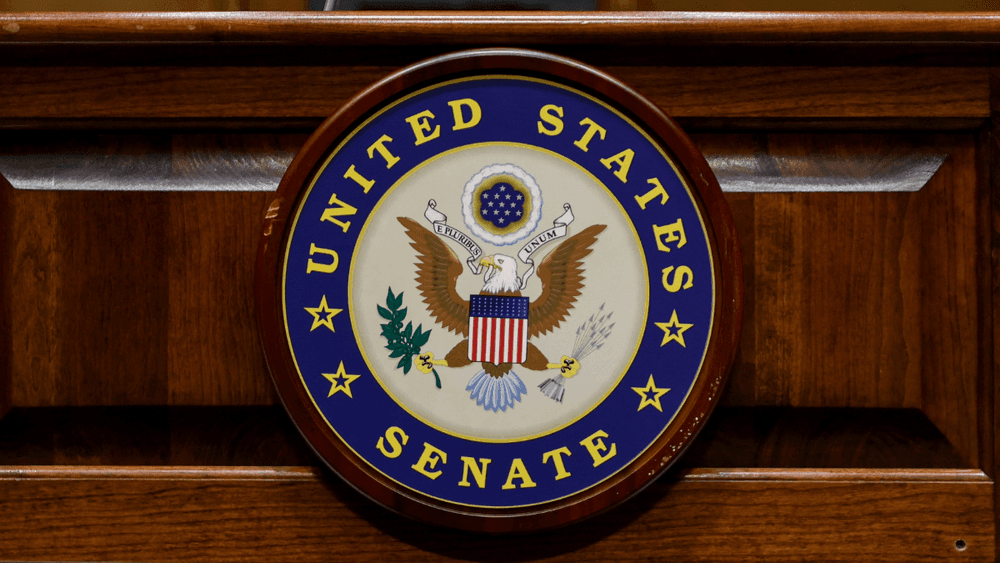
Senate Advances AI Regulation Moratorium
A Republican effort to prevent U.S. states from enforcing their own artificial intelligence regulations cleared a major procedural hurdle in the Senate on Saturday.
Funding Penalty for State AI Laws
The provision, reportedly rewritten by Senate Commerce Chair Ted Cruz to comply with budgetary rules, would withhold federal broadband funding from any state that attempts to implement AI regulations within the next 10 years.
This revised language has passed scrutiny by the Senate Parliamentarian, who ruled that it does not violate the Byrd rule. This means the moratorium can be included in Republicans’ proposed “One Big, Beautiful Bill”, allowing it to pass with a simple majority — avoiding a filibuster and without requiring Democratic support.
Divisions Among Republicans
However, it remains unclear how many Republicans will support the moratorium. Senator Marsha Blackburn of Tennessee, for example, recently stated:
“We do not need a moratorium that would prohibit our states from stepping up and protecting citizens in their state.”
While the House of Representatives previously passed a version of the bill including the moratorium, Representative Marjorie Taylor Greene, a member of the far-right, later opposed the measure. She called it:
“A violation of state rights”and demanded that it be “stripped out in the Senate.”
National Unity vs. State Autonomy
House Speaker Mike Johnson defended the moratorium, arguing that it had President Donald Trump’s backing and stating:
“We have to be careful not to have 50 different states regulating AI, because it has national security implications, right?”
Concerns From AI Regulation Advocates
A recent report from Americans for Responsible Innovation, an advocacy group promoting AI regulation, warned:
“The proposal’s broad language could potentially sweep away a wide range of public interest state legislation regulating AI and other algorithmic-based technologies, creating a regulatory vacuum across multiple technology policy domains without offering federal alternatives to replace the eliminated state-level guardrails.”
States Moving Forward on Their Own
Despite federal-level pushback, several states are actively pursuing AI regulation:
- California: Governor Gavin Newsom vetoed a major AI safety bill last year but signed less controversial legislation addressing privacy and deepfakes.
- New York: A state-level AI safety bill has passed the legislature and is now awaiting Governor Kathy Hochul’ssignature.
- Utah: Passed its own law focused on AI transparency requirements.