Subnet 9 – IOTA: Your Simple Guide
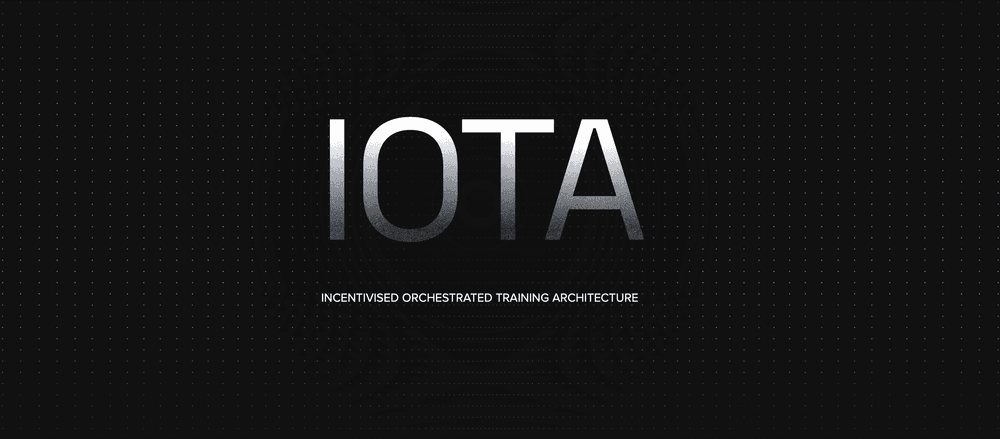
The decentralized AI landscape is evolving rapidly, and one of the most innovative experiments taking place is IOTA—short for Incentivised Orchestrated Training Architecture. Operating within the Bittensor network as Subnet 9, IOTA is changing how large language models (LLMs) are trained by harnessing a new kind of collective intelligence. It’s a system designed for efficiency, collaboration, and accessibility—values that lie at the heart of Web3 AI.
In this article, we’ll explore what IOTA is, how it works, why it matters, and who is driving it forward. Whether you’re a developer, researcher, or simply AI-curious, consider this your comprehensive guide to one of the most promising projects in decentralized machine learning.
What Is IOTA?
At its core, IOTA is a decentralized method of pre-training large language models without relying on centralized control or prohibitively expensive GPUs. Traditional pretraining setups demand huge computational resources, making it accessible only to well-funded institutions. IOTA flips that model by distributing the training task across many participants in a swarm-like configuration.
IOTA was born within the Bittensor ecosystem—an open, decentralized network where machine learning models live, train, and compete for rewards in $TAO tokens. Initially, miners trained their own models from scratch, each trying to outperform others to receive rewards. However, this model discouraged collaboration and led to redundant computation.
With IOTA, the approach becomes collaborative rather than competitive. Training is split across participants, turning the network into one giant, distributed supercomputer. Each participant contributes to a small part of the whole, enabling even low-power machines to take part in building powerful models.
How Does IOTA Work?
The IOTA training process follows a coordinated flow involving two main roles: Miners and Validators.
1. Distributed Training
Miners train a portion of a large AI model. This could mean a specific batch of data, a segment of model weights, or a small training step—whatever the network assigns. Each miner focuses on a micro-task, reducing the computational burden.
2. Validation
Once training updates are submitted, Validators step in. They evaluate the quality of these updates using pre-defined test datasets. Their goal is to assess which contributions truly improve the model.
3. Scoring and Consensus
Validators submit performance scores to the blockchain. These scores form the consensus layer, ensuring that only genuinely helpful contributions are rewarded.
4. Incentivization
The protocol rewards both Miners and Validators in $TAO tokens based on the quality and usefulness of their work. The better the contribution (as judged by the Validators), the bigger the reward. This dual-sided incentivization keeps both sides honest and motivated.
This architecture is designed to be scalable and resilient. By splitting tasks into smaller pieces, IOTA enables a decentralized AI cluster to emerge from participants worldwide, regardless of their hardware capabilities.
Why Is IOTA Different?
One of IOTA’s most compelling strengths is that it becomes more efficient as it scales. Unlike traditional AI training—which hits a wall due to communication bottlenecks and massive infrastructure demands—IOTA thrives with size.
Consider this: doubling the performance of a large model typically results in 10x the cost. This exponential growth in cost has become a massive barrier to innovation in centralized systems. But swarm-based, distributed approaches like IOTA sidestep this issue by parallelizing work across many small contributors.
This makes IOTA not just an alternative—but a necessary evolution—for training frontier-scale models in a sustainable way.
Who’s Behind IOTA?
IOTA is managed by Macrocosmos AI (@MacrocosmosAI), an organization rapidly gaining prominence within the Bittensor ecosystem. Macrocosmos isn't a one-subnet wonder. They're the driving force behind multiple subnets, including:
- SN1 Apex
- SN13 Data Scraping
- SN25 Mainframe
- SN37 Fine-tuning
Each of these subnets tackles different parts of the AI training and deployment lifecycle, making Macrocosmos one of the most vertically integrated and influential players in decentralized AI.
Leadership
- CEO: @WSquires
- CTO: @macrocrux
Their vision is ambitious: to build the world’s largest distributed machine learning platform—and with IOTA, they’re well on their way.
Growth Metrics
As of June 18, 2025, here’s how IOTA is performing in the Bittensor ecosystem:
- Rank: 9 among all subnets
- Token Price: $13.66 (τ0.0389)
- Market Cap: $19.46 million
These numbers are more than just stats—they reflect growing trust in IOTA’s architecture and its real-world viability as a decentralized AI training protocol.
Getting Involved
If you’re excited about the possibilities of IOTA and want early access to innovations like this, platforms like SimplyTao are making it easier than ever. From startup tools to direct participation in Bittensor subnets, they aim to democratize AI on every level.
Final Thoughts
IOTA exemplifies the best of decentralized AI: open, collaborative, permissionless, and efficient. It demonstrates that high-performance AI training doesn't need to be the domain of trillion-dollar tech companies. With the right coordination and incentive mechanisms, the global community can build and train LLMs together.
Whether you’re a hobbyist with a gaming GPU, a validator interested in AI alignment, or a startup building on decentralized rails, IOTA is worth watching—and even more worth participating in.