Why AI Matters: Jensen Huang’s Urgent Vision for the Future
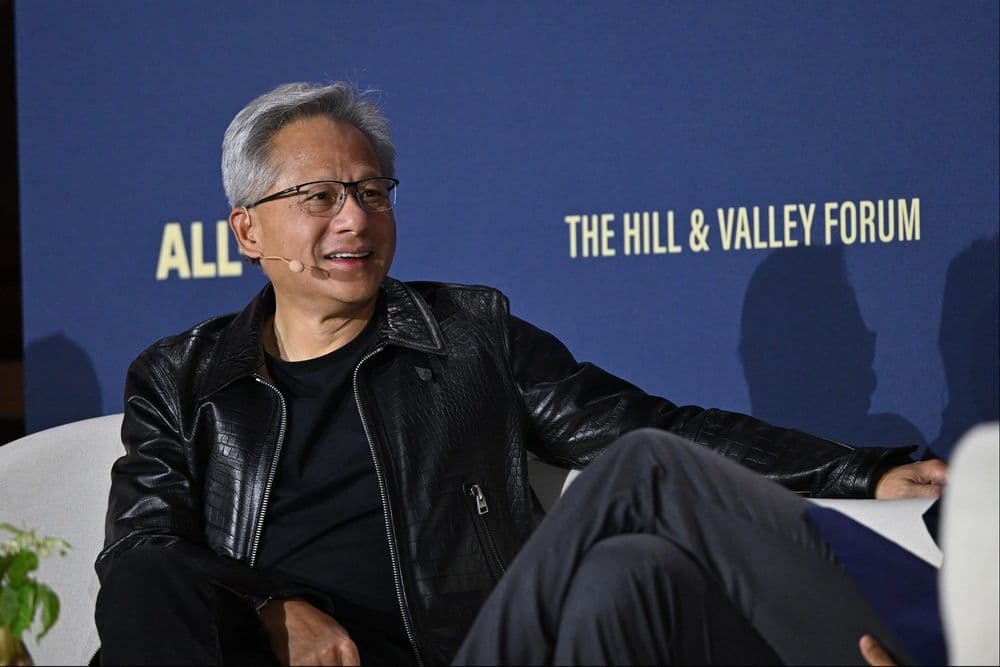
Why AI matters isn’t just a philosophical question - it’s a strategic one. In his keynote, NVIDIA CEO Jensen Huang outlined why artificial intelligence will redefine the future of work, infrastructure, economics, and national power.
In this article, we break down the most important takeaways from Huang’s talk on why AI matters, how to prepare for what’s coming, and what leaders must act on today.
Why AI Matters: It Creates Jobs and Augments Every Role
AI isn’t here to take your job - it’s here to amplify it. Huang emphasized how AI enhances roles across the board. At NVIDIA, engineers, designers, and artists all use AI to work faster and smarter. It removes repetitive tasks and unlocks time for innovation.
“If you don’t use AI, you’ll lose your job to someone who does.” - Jensen Huang
Why this matters: The near-term winners won’t be the companies replacing people. They’ll be the ones helping them perform at AI-enhanced speed.
Plan Ahead: Scarce Chips and Smart Allocation
AI progress relies on hardware. Huang addressed GPU shortages by advocating long-term planning. NVIDIA now publishes a one-year roadmap so partners can plan power, cooling, and spending accordingly. This reduces chaos and encourages predictable growth.
Why this matters: Strategic allocation lets companies grow responsibly. AI infrastructure needs to be planned like a utility, not improvised like a product launch.
The Economics Work: Costs Keep Dropping, Value Keeps Growing
With each chip generation, efficiency improves: more output per dollar and per watt. Even post-launch, chips like Hopper improve via CUDA software updates. Huang also noted that AI models improve over time, showing residual value - a rare trait in tech assets.
Why this matters: Falling unit costs make longer reasoning possible. That means more tokens, smarter models, and no explosion in costs.
From Data Centers to AI Factories
Huang introduced the concept of AI factories - physical facilities continuously generating AI output. Unlike traditional software, AI needs constant training and iteration. That requires an industrial base for data, models, and inference.
“We’re going from writing code to producing intelligence.” - Jensen Huang
Why this matters: AI production is no longer a software activity. It’s an industrial-scale process requiring long-term investment in energy, cooling, and computation.
U.S. Advantage: Tech Leadership and Manufacturing
The U.S. still leads in the AI race - but Huang warns this edge needs defending. He credits world-class developers, open systems, and strong energy policy. From AI fabs in Texas to public-private investments, the U.S. must double down to stay ahead.
Why this matters: AI success isn’t just about data. It’s about physical capacity - hardware, chips, energy -and who controls it.
Why Physical AI Matters: Autonomy Everywhere
Autonomy will extend far beyond chatbots. Huang envisions a future where everything that moves is autonomous - from Tesla’s cars to home robots. Every manufacturer will need two factories: one for hardware, and one for AI brains.
Why this matters: This shifts the focus from the cloud to the real world. AI will touch vehicles, homes, and industries. Autonomy becomes infrastructure.
Open Models and Energy Efficiency
Open-source AI will play a crucial role. Huang praised multi-step reasoning models, which think more like people. He believes open ecosystems will accelerate innovation and reduce costs. Reasoning, not just predicting, is what the next wave of AI demands.
Why this matters: More efficient reasoning = lower compute cost per useful task. Open models help democratize this access.
How This Connects to BittensorBittensor offers a real-world example of the open, decentralized AI model Huang envisions. Instead of relying on closed, centralized systems, the Bittensor network allows anyone to train and evaluate models in a public, transparent way. Because models compete for rewards based on their usefulness - not their size - Bittensor directly supports Huang’s vision of open-source AI, more efficient energy usage, and democratized access to intelligence.
The Takeaway: Why You Must Act Now
Jensen Huang’s message is clear: AI is no longer optional. Companies must adopt it today. Whether you're a solo engineer or a national policymaker, the time to invest is now - in models, hardware, training, and infrastructure.
“The teams that adopt AI today will lead tomorrow.” - Jensen Huang