OpenClaw Founder Joins OpenAI: What It Means for AI Agents?
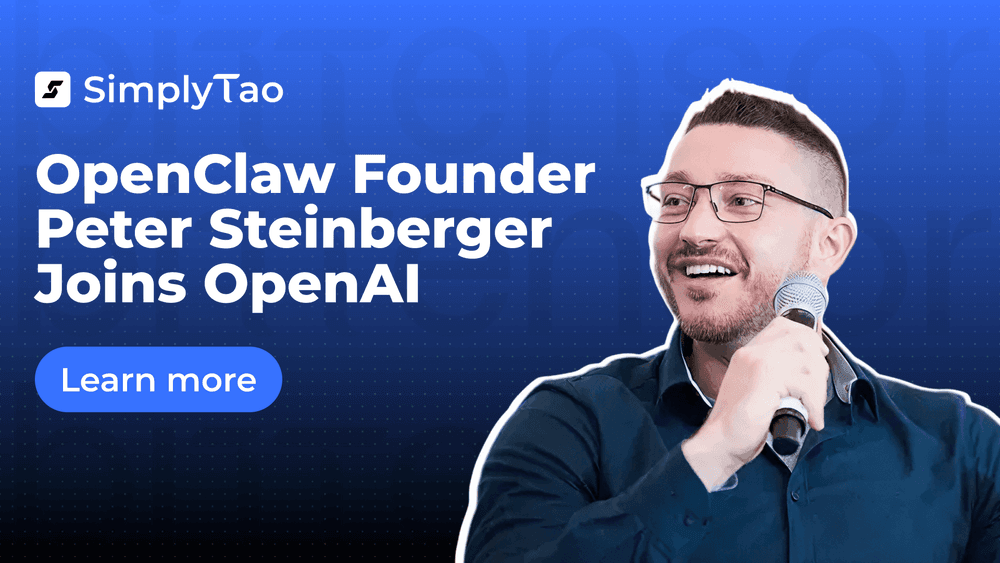
The OpenClaw founder became one of the most discussed names in artificial intelligence in early 2026. When the OpenClaw founder joined OpenAI, the announcement was widely interpreted as a strategic signal. It suggested that autonomous AI agents are no longer experimental side projects. Instead, they are quickly becoming the next major product category in the AI industry.
OpenClaw gained momentum because it delivered something many AIassistants still lack. It offered a practical open-source framework designed for execution, automation, and real-world workflows. As a result, the OpenClaw founder suddenly found himself at the center of a rapidly accelerating competition between the largest AI labs.
Why OpenClaw Became a Breakthrough
OpenClaw emerged in late 2025 as an open-source autonomous AI agent platform created by Austrian developer PeterSteinberger. The project first appeared under the name Clawdbot and later went through several rebrands, including Moltbot, before becoming OpenClaw. Its growth on GitHub was unusually fast. Within a short period, it attracted tens of thousands of stars and forks, making it one of the most visible agent-related repositories in the world.
The reason for this success was simple. OpenClawwasdesignedto act. While many AI tools remain conversational, OpenClaw focuses on executing tasks across real environments. It runs locally on a user’s device and can connect with messaging platforms such as WhatsApp, Telegram, Discord, and Slack. This makes it feel like a persistent personal assistant rather than a chatbot that exists only inside a browser.
The OpenClaw platform can handle multi-step workflows. It can manage email, schedule meetings, organize files, automate processes, and execute shell commands. It can also connect to third-party services through APIs. Another key feature is persistence. OpenClaw can maintain memory and context over time, which makes it useful for continuous automation rather than one-time interactions.
At a technical level, OpenClaw bridges large language models with tool execution. It can integrate with models such as GPT-4, Claude, and DeepSeek, but the real value lies in orchestration. Instead of generating text and stopping, OpenClaw generates plans and completes actions. This architecture reflects a broader shift happening across AI development, where agent frameworks are becoming as important as the underlying language models.
Why OpenAI Hired the OpenClaw Founder
As OpenClaw continued to grow, it attracted attention from major technology companies. Autonomous AI agents are increasingly seen as the next competitive battleground. Reports suggested that companies such as Meta and OpenAI explored discussions with Peter Steinberger, recognizing that agent frameworks could define the next generation of consumer and enterprise AI products.
In February 2026, OpenAI confirmed that Steinberger would be joining the company. OpenAI CEO Sam Altman described the hire as a major step toward building the nextgenerationofpersonalagents. Altman stated:
Peter Steinberger is joining OpenAI to drive the next generation of personal agents. He is a genius with a lot of amazing ideas about the future of very smart agents interacting with each other to do very useful things for people. We expect this will quickly become core to our product offerings.
This statement reveals why the OpenClaw founder was such a strategic hire. OpenAI is not only focused on improving model intelligence. It is focused on creating systems that can operate independently, coordinate tasks, and interact with other agents. This multi-agent direction is quickly becoming a defining theme in the future of AI.
Altman also emphasized that OpenClaw will remain open-source and continue under foundation governance. He added:
OpenClaw will live in a foundation as an open source project that OpenAI will continue to support. The future is going to be extremely multi-agent and it’s important to us to support open source as part of that.
This is an important detail. It suggests OpenAI wants to shape the open-sourceecosystem rather than replace it. If OpenClaw continues to evolve as an independent project supported by OpenAI, it may become a major infrastructure layer for future agent development.
What This Means for the Future of Multi-Agent AI
The OpenClaw founder joining OpenAI reflects a major transition in the AI industry. For years, competition was defined mostly by model performance. Companies raced to build larger systems, achieve better benchmarks, and release stronger chat assistants. However, the focus is now shifting toward execution. AI labs are investing in agents that can browse, plan, calltools, andcompleteworkflows.
This shift will likely transform how AI is used in daily life. Instead of asking an AI assistant a question, users will increasingly delegate tasks. Agents will coordinate with each other, exchange context, and complete workflows automatically. That is the multi-agent future Altman described, where networks of specializedagents collaborate to produce useful outcomes.
However, autonomous agents also introduce new risks. Systems like OpenClaw can access sensitive data and execute commands. This creates security and privacy challenges that do not exist in simple chatbot environments. Misconfigured permissions, malicious prompts, or adversarial exploitation could cause agents to take unintended actions. As a result, safety frameworks such as sandboxing, permission controls, and monitoring will become essential parts of agent development.
Ultimately, the OpenClaw founder joining OpenAI is more than a headline. It is a sign that the industry is moving from language generation to real-world automation. OpenClaw demonstrated that open-source agent systems can grow quickly and influence the priorities of the most powerful AI organizations. OpenAI’s decision to hire the OpenClaw founder confirms that autonomous agents are becoming central to the future of artificial intelligence.