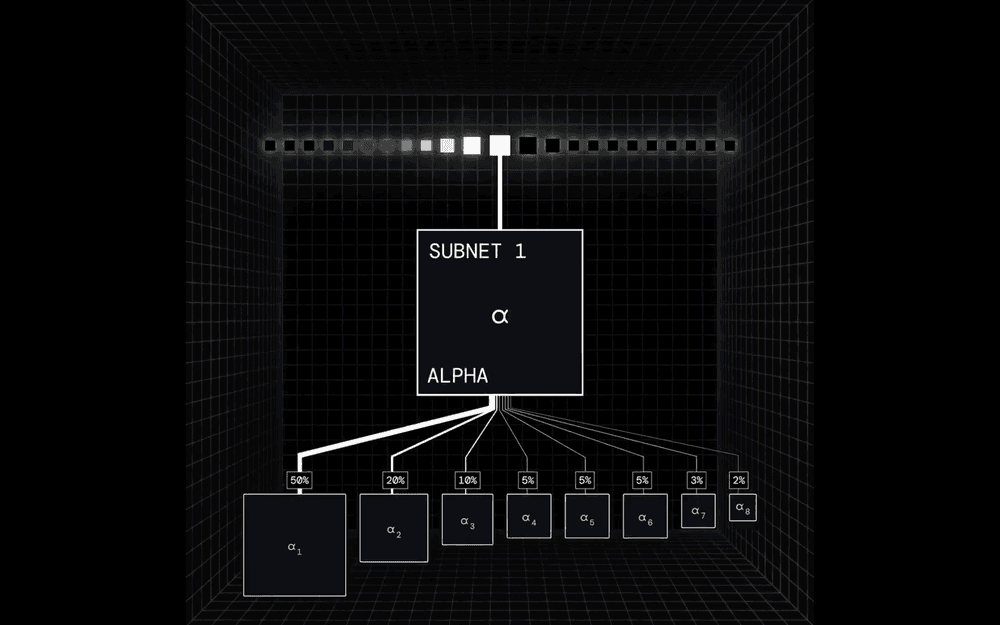
Bittensor Mainnet Upgrades, 26 September 2025
Bittensor is rolling out a set of mainnet changes aimed squarely at network health, builder velocity, and capital efficiency. The headline items: the return of subnet registration and deregistration, native support for multiple incentive mechanisms inside a single subnet, UID pruning, and rate limits on hyperparameter changes. Together, these updates raise the competitive bar for subnet teams while making it easier to experiment safely.
Below is a clear breakdown of what’s changing, why it matters, and what to watch next.
TL;DR
- Subnet cap: 128 subnets
- New-subnet immunity: 4 months
- Deregistration flow: Lowest-performing non-immune subnet is removed when a new one registers
- TAO redistribution: TAO in a deregistered subnet’s pool goes pro-rata to alpha holders
- Subnet Mechanisms: Native support for multiple incentive mechanisms per subnet (initially 2 mechanism IDs)
- UID pruning: Subnet owners can reduce UIDs down to 64 (if <20% of those UIDs are out of immunity)
- Hyperparameter changes:Rate-limited to 2 tempos per parameter; enforced per-parameter, adjustable by the triumvirate via sudo
References and further reading:
- Subnet (de)registration & redistribution: issue references #1651 and BIT-0016; PR: https://github.com/opentensor/bits/pull/29
- Subnet Mechanisms (docs): https://docs.learnbittensor.org/learn/anatomy-of-incentive-mechanism
- UID pruning: #1998; PR: https://github.com/opentensor/subtensor/pull/1998
- Hyperparameter rate limiting: #2048; PR: https://github.com/opentensor/subtensor/pull/2048
Subnet Registration & Deregistration Return
What’s new: Registration and deregistration are back. The global subnet count remains capped at 128. Whenever a new subnet registers, it displaces the lowest-performing non-immune subnet. To give new entrants a fair runway, every new subnet receives 4 months of immunity.
Why it matters:
- Meritocratic pressure. With a fixed cap and automatic displacement of laggards, subnet teams must demonstrate consistent value to avoid being cycled out.
- Faster capital recycling. When a subnet is deregistered, TAO in that subnet’s pool is redistributed pro-rata to alpha holders. That helps unlock TAO tied up in inactive or underperforming pools and redirects it to where it can be more productive.
Who benefits:
- Builders who can ship and iterate quickly now have a clearer path to displace stagnant subnets.
- Stakers benefit from a healthier marketplace where capital flows toward active, high-quality work.
Subnet Mechanisms
What’s new: Bittensor introduces native support for multiple incentive mechanisms within the same subnet - rebranded simply as Subnet Mechanisms. Previously, subnet owners had to craft and maintain complex custom logic to reward different kinds of miner outputs under one umbrella. Now, this capability is built in. Subnet owners can:
- Define distinct objectives for miners attached to each mechanism
- Split and direct incentives between those mechanisms
- Start with an initial limit of 2 mechanism IDs per subnet
Documentation: https://docs.learnbittensor.org/learn/anatomy-of-incentive-mechanism
Why it matters:
- More with less. A single subnet can now house multiple projects or tasks, uniting them under one market capand governance surface.
- Lower experimental cost. Teams can pilot new ideas without spinning up an entirely new subnet, reducing overhead and coordination risk.
- Clearer specialization. Different mechanism IDs let owners tailor objectives and scoring to the nature of the work (e.g., retrieval vs. generation, speed vs. accuracy).
Who benefits:
- Subnet teams gain agility: they can test, pivot, and scale diverse objectives from a single base.
- Miners see clearer, more targeted incentive signals per mechanism.
UID Pruning
What’s new: Subnet owners can reduce the number of UIDs in their subnet provided fewer than 20% of those UIDs are out of immunity. See PR #1998: https://github.com/opentensor/subtensor/pull/1998.
Why it matters:
- Streamlined scoring. With fewer UIDs, validation and scoring become leaner, lowering operational overhead.
- Less chain bloat. Pruning helps reduce on-chain footprint as subnets right-size their active participant sets.
- Sharper competition. Keeping only the most performant or mission-aligned miners can raise average quality.
Who benefits:
- Subnet owners gain operational flexibility and can maintain a tighter, higher-signal miner set.
- Serious miners benefit from clearer feedback loops and less noise.
Strategic Implications
- Heightened Darwinism, Healthier MarketThe 128-subnet cap plus deregistration of low performers creates a living marketplace where relevance must be earned and maintained. Expect higher throughput of ideas as new entrants challenge incumbents.
- Capital Efficiency UnlockTAO redistribution from deregistered pools recycles idle capital, accelerating its movement to more active subnets and reducing deadweight.
- Innovation Without SprawlSubnet Mechanisms make it simpler to host multiple objectives under one roof, cutting coordination costs and encouraging rapid experimentation with limited downside.
- Operational DisciplineUID pruning and hyperparameter rate limits favor teams that document, measure, and iterate methodically. The result should be cleaner scoring, less bloat, and fewer governance surprises.
What to Watch Next
- Mechanism design patterns. As subnets adopt two mechanism IDs, look for templates (e.g., one mechanism for exploration, another for exploitation) and community best practices to emerge.
- Rotation velocity. Track how often new subnets register and which incumbents get displaced—this will indicate competitive intensity and capital reallocation speed.
- Triumvirate adjustments. Keep an eye on sudo updates to the hyperparameter rate limit if market conditions change.
- Tooling & dashboards. Expect better observability around mechanisms, UID composition, and parameter changes as these features bed in.
Further Reading & References
- Registration, deregistration, TAO redistribution: #1651, BIT-0016, PR: https://github.com/opentensor/bits/pull/29
- Subnet Mechanisms (docs): https://docs.learnbittensor.org/learn/anatomy-of-incentive-mechanism
- UID Pruning: PR #1998: https://github.com/opentensor/subtensor/pull/1998
- Hyperparameter Rate Limiting: PR #2048: https://github.com/opentensor/subtensor/pull/2048
Bottom Line
These changes tighten Bittensor’s incentive gradients while giving builders more surface area to innovate-all with guardrails that curb volatility and bloat. Subnet teams that move fast, ship visibly, and communicate clearly should thrive in this next phase.