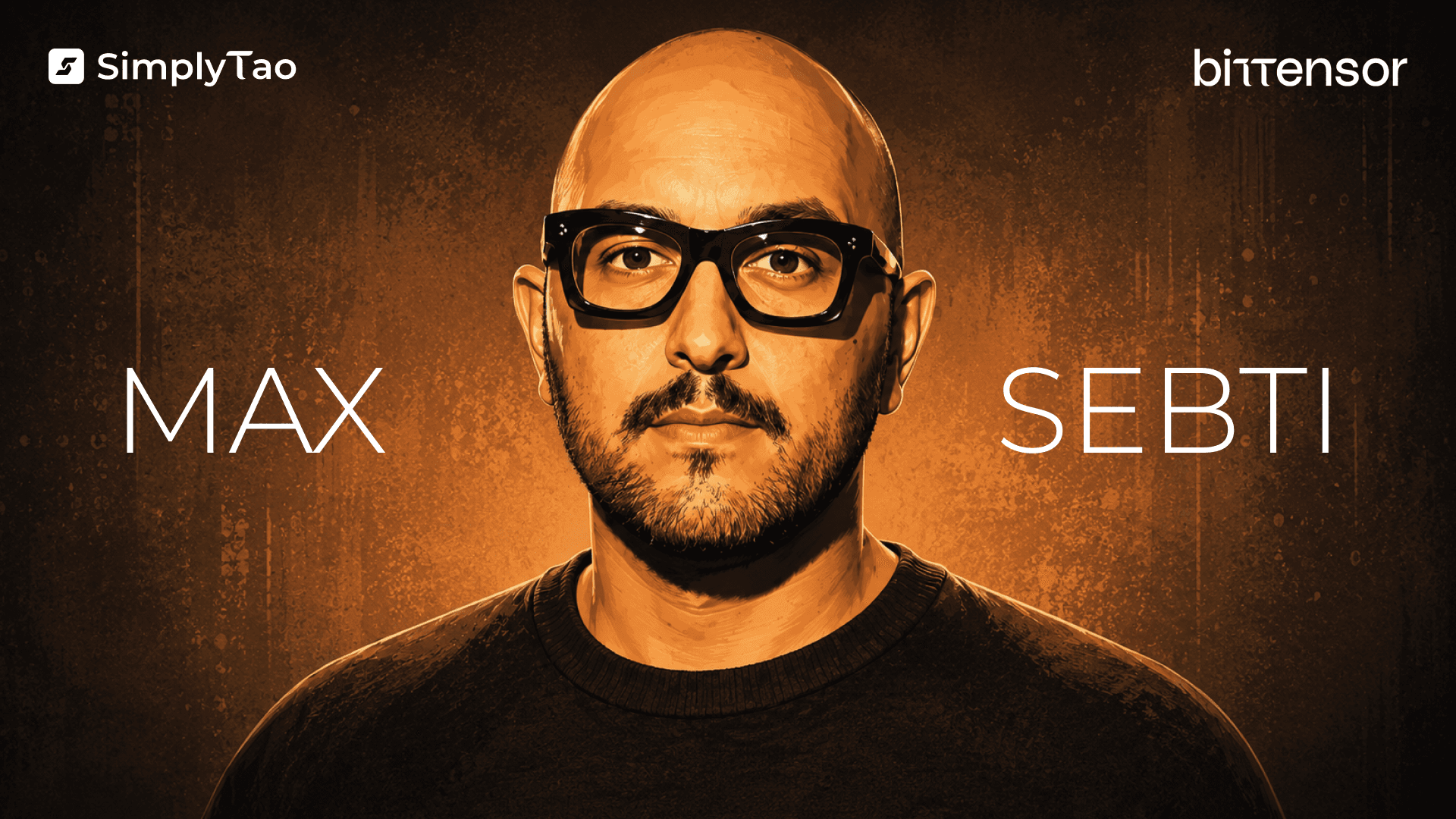
Max Sebti on Score (SN44): AI That Gives Every Camera a Brain
This article summarizes a conversation between Max Sebti, the founder behind Score (SN44), and crypto content creator Crypto Millie. You can watch the full interview on Millie’s YouTube channel here. All quotes and claims below come directly from that discussion.
In a recent long-form interview, Max Sebti, the founder behind Score (SN44), sat down to explain his work. He showed how a Bittensor subnet is quietly building one of the most practical applications of decentralized AI. The conversation traced his path from photographer to computer vision builder. It also laid out how Score (SN44) turns ordinary cameras into intelligent systems. For anyone trying to understand where real-world adoption meets Bittensor, the Max Sebti Score (SN44) interview offered a clear and grounded picture.
The interview matters because it moves past abstract promises. Instead, it shows a subnet with real client interest and a working product. It also shows a founder who can break down complex machine learning ideas into plain language. Throughout the conversation, Max Sebti kept returning to one theme. The goal is making every camera intelligent. Moreover, the technology behind that mission is far more accessible than it first appears.
From Photographer to Computer Vision Founder
Before founding Score (SN44), Max Sebti spent years learning how data, markets, and incentives fit together. His journey in AI began around seven or eight years ago. Back then, he worked for a spinoff of hCaptcha, the company behind those familiar verification puzzles. That spinoff focused on data collection in a distributed way. Notably, it organized a global workforce around a token.
That early experience shaped his thinking in a lasting way. He became fascinated by how a token could coordinate work across the world. However, he also learned a hard lesson about design. As he put it, a poorly built token can backfire, because your own token can become your own selling pressure. From that point forward, he treated tokenomics with caution. Furthermore, he committed to staying inside the decentralized data and AI world.
Next, he co-founded CrunchDAO. This community of machine learning engineers competed to build predictive models for banks and hedge funds. During his time there, the community grew to roughly 8,000 members. Since then, it has expanded to around 11,000. While at CrunchDAO, a meeting with a sports hedge fund changed his direction. The fund wanted to apply CrunchDAO-style competitions to sports. Crucially, it named access to computer vision as the single biggest blocker in the way.
What makes his pivot interesting is the personal thread behind it. His very first job was as a photographer. After that, he worked as an art director and then as a startup CMO. That creative background helps explain his pull toward vision. He had spent years capturing the world creatively. Now, however, he wanted to capture the world using AI. So he doubled down on computer vision, even though his CrunchDAO co-founder was not excited about the vertical.
How Max Sebti Score (SN44) Found a Home on Bittensor
The origins of the subnet trace through familiar names in the Bittensor ecosystem. Shadi from an early version of subnet six, then known as Infinite Games, made a key introduction. He connected Max Sebti with Evan from what was then called DCG. That organization later became Yuma Group. Consequently, DCG helped register the subnet that would become Score.
Initially, the team planned something narrower. Given his CrunchDAO background, Max Sebti assumed the subnet would focus on prediction models. In fact, the project even started as “Score Predict.” However, conversations with key people around the protocol pushed him toward greater ambition. Supporters at the Opentensor Foundation, with Mog backing the project since day one, urged the team to think bigger. They wanted more than simple predictions. Instead, they pushed the team to solve computer vision in a horizontal way.
The team listened. As a result, the project moved from Score Predict to Score. Then, in January 2025, it launched its first computer vision competition. That decision set the foundation for everything that followed. It also positioned Max Sebti Score (SN44) as a dedicated vision intelligence layer rather than a narrow prediction market.
What Score (SN44) Actually Does
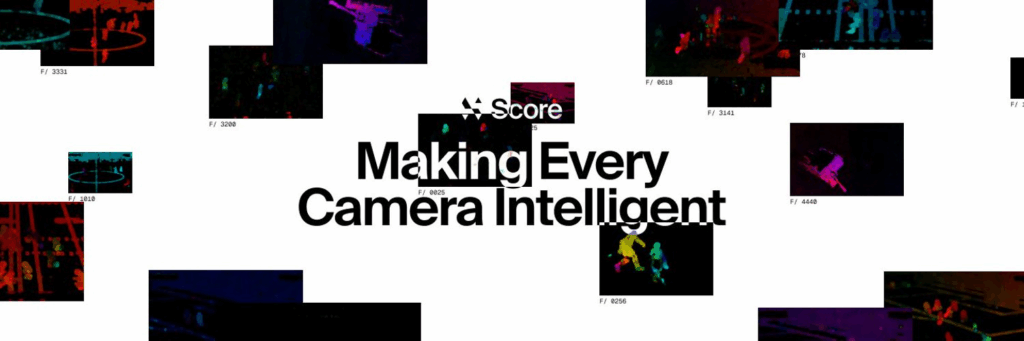
When asked to explain the subnet simply, Max Sebti kept it tight. Score is making every camera intelligent. The deeper question is how. The answer comes down to a technique called distillation.
Distillation uses large, slow, expensive, state-of-the-art models to create small, focused models. The team calls these models vision bricks. In machine learning, the big model is usually called the teacher. Meanwhile, the smaller models are the students. Because each brick is trained to do one specific thing, it runs far more efficiently than the large model. According to Max Sebti, these bricks can be 300 to 400 times more efficient than the big model.
Efficiency alone does not explain the design, however. The team built small bricks because camera data is extremely sensitive. Most people and businesses do not want anyone seeing what their cameras record. Therefore, the bricks are small enough to run on the edge locally. As a result, the data never has to travel back to the cloud. This keeps everything private and instant at the same time.
This is the core of the subnet. Score (SN44) functions as an open layer for vision intelligence. The team frames it as a kind of layer one. The subnet is also preparing to sell access to those small bricks. Furthermore, it will let any company that needs state-of-the-art vision send a task in a completely permissionless way. In other words, if you need vision intelligence, the subnet provides the open foundation to get it.
Manako: The Front End That Hides the Complexity
A powerful open layer still leaves a problem. Most people who want to use vision AI are not engineers. Even skilled technical teams rarely master every required skill at once. Real vision systems demand strength in data sourcing, model sourcing, pipeline construction, evaluations, and DevOps. On top of that, they require running that pipeline consistently around the clock.
This is where Manako enters the picture. Manako is a separate front end. It lets non-technical users tap into the subnet without touching any of that complexity. As Max Sebti described it, Manako replaces a computer vision DevOps and architecture team. It abstracts away the hard parts, so anyone can effectively talk with their own cameras. If the subnet is layer one, then Manako is the accessible layer above it.
Importantly, the two are distinct entities. The subnet is one thing, and Manako is another. Manako exists to find clients through a clean, simple interface. Every time it lands a client, it pays the subnet much like any company would pay AWS for cloud services. In effect, the team built a sales engine that channels real revenue back into the Max Sebti Score (SN44).
Public and Private Tracks, and the Manifest That Ties It Together
The technical heart of the interview explained how the subnet stays fast, fair, and hard to game. The first version tried to optimize for two things at once. Specifically, it pushed for accuracy and real-time speed together. That dual focus made the subnet easy to game. So the team rethought the entire process. Jacob Steeves, known as Const, helped considerably during the redesign.

The rebuilt subnet became completely open source and transparent. It now focuses on a single goal, namely efficiency. Here efficiency carries a precise meaning. It is defined as accuracy divided by the power needed to run the model. By validating one clear metric rather than several, the team created a cleaner incentive structure.
On the public track, validation follows a two-step process. First, miners upload a model file to Hugging Face. This proves real work took place. Then, the model runs its inference through a validator system the team calls shoots. Next, the subnet compares the open-source result against the validated result. Whoever produces the best matching answer gets rewarded.
The private track runs in parallel for sensitive clients. These clients cannot expose their data or share a model with competitors. Here, miners build and submit a Docker container. The team then runs it with full access to the model. Meanwhile, the requirements come directly from the client. Validation is refreshingly simple. If the model does what the client expects, the winner takes the reward. This winner-takes-all structure hands the prize to a single miner.
Tying both tracks together is an innovation the team calls the manifest. Normally, adding or removing a task would mean rewriting the entire subnet codebase. Instead, the team simply edits one file. New tasks then appear on the subnet automatically. Max Sebti believes no other subnet works this way. The result is a dynamic, completely flexible system. It can scale to many vision tasks without constant code overhauls.
The Data Flywheel That Keeps Models Improving
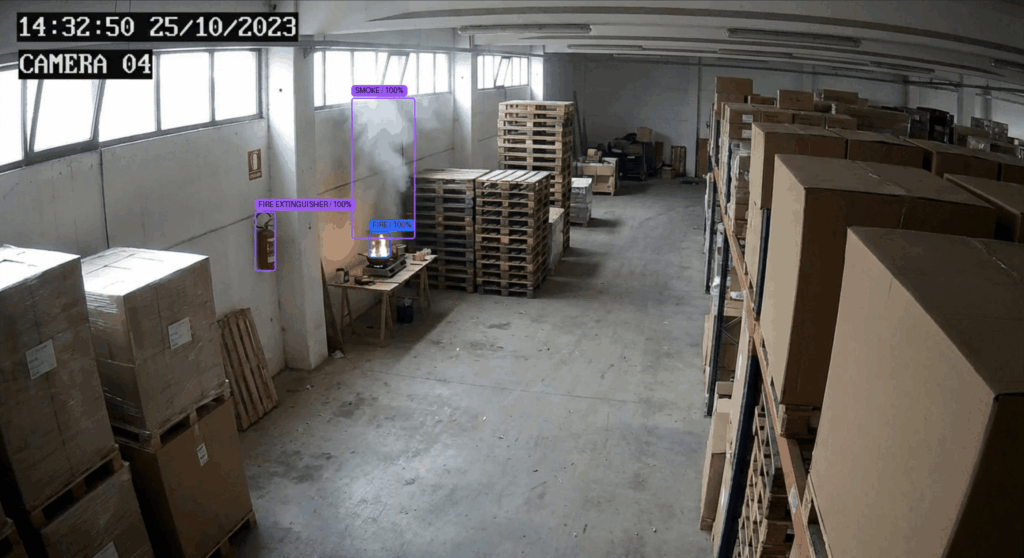
One of the most compelling ideas involved how the models keep getting better. Max Sebti described two distinct loops. Together, they form a powerful feedback engine.
In the first loop, synthetic data runs evaluations for tasks before they go live. This serves as a form of pre-training for the small bricks. In the second loop, Manako sends real-world data back to the miners. This data reflects what actually happens in deployment. When the lab result and the real-world result diverge, that information flows back to the subnet. As a result, the model improves. He compared this stage to reinforcement learning with human feedback. That same broad approach sharpens many leading AI systems.
The interviewer captured why this matters with a sharp analogy. In his words, the setup resembles why Tesla is so valuable. The lasting advantage lies not only in the models. Instead, it lies in the data collected from real-world experience across many places and situations. Consequently, a continuous stream of deployment data builds a moat that competitors struggle to copy.
Why Businesses Adopt the Technology
For all the technical depth, the commercial pitch stays straightforward. The main driver is that the bricks are super efficient and can run on site. This directly satisfies the top concern for most businesses, namely keeping their data local. Often, that single advantage closes the conversation.
A second advantage is flexibility. Most computer vision companies are highly specialized. Typically, they focus narrowly on tasks like theft prevention or security. Moreover, they rarely let customers combine capabilities within one tool. By contrast, the subnet lets clients combine bricks to do more than off-the-shelf products allow. Max Sebti argued this gives the project a meaningful commercial edge. He also suggested the project faces relatively few true competitors.
The practical payoff is easy to picture. A gas station owner could deploy camera intelligence to reduce theft. At the same time, the system could flag operational issues such as a backed-up pump. Over time, that visibility saves money. The deeper point is simple. Many people see only the surface idea of camera intelligence, without grasping the operational value underneath.
Revenue, Investment, and the Balance Between Subnet and Company
The interview did not shy away from hard financial questions. Asked whether the subnet is profitable, Max Sebti answered honestly. The project does generate revenue. However, it has not reached break-even. To cover costs, the team has invested significant personal capital. The team now numbers 13 people.
He also addressed selling pressure and emissions. By arranging careful OTC deals with funds and investors around TAO, the team has stayed protective of its token. His own definition of a profitable subnet is precise. Such a subnet should be able to offset the chain’s emissions. He acknowledged that reaching that point remains a journey. Even so, the project keeps moving forward.
A notable development came at Proof of Talk. There, the team announced that the subnet will activate native payments. It will also allow anyone to launch a task. Meanwhile, it will remain an open-source, permissionless vision layer. On the company side, the team accepted a one million dollar investment from TaoWeave, a publicly listed company. In response, it matched that amount by locking the same sum in perpetual conviction. That gesture was meant to signal balance and good faith between the two projects. After all, everything in this space is new, and there is no established playbook to follow.
Crucially, Max Sebti stressed an important point. It would be unhealthy for Manako to remain the only company building on the subnet. In his view, creating a monopoly around the subnet would kill the spirit of Bittensor. Therefore, he wants the subnet to stay competitive and open. Above all, it should generate its own revenue from many clients rather than one.
Where Vision Intelligence Goes Next
Looking ahead, Max Sebti sees the subnet as far more than a brick factory. He pushed back on the idea that building a fixed number of bricks would be the end. As he noted, a project this different from six months ago will not stay frozen for years. There are more models to distill. There are also more techniques to add and more capabilities to explore.
He also wants other companies to build on the subnet directly. In particular, he singled out Roboflow, a computer vision platform with around a million members. He would love to see it using the subnet. The reason is clear. The subnet’s bricks are more efficient than the models such platforms currently rely on. Ultimately, the ambition is for many Manako-style companies to plug into the same open layer.
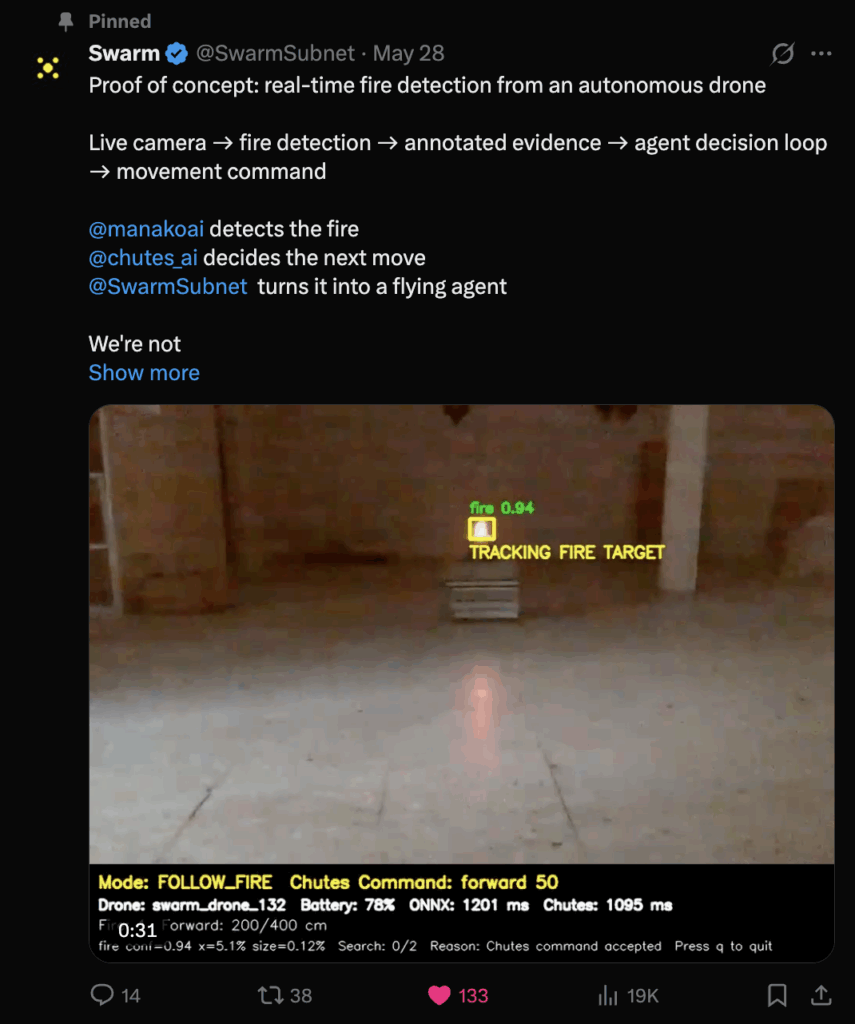
The vision extends toward world models, robotics, and drones. He shared a vivid example involving a subnet called Swarm. Its CEO grabbed an open-source fire detection model from Hugging Face. He then loaded it onto a drone. During a test, the drone instantly caught an early fire. That kind of cross-subnet reuse shows how an open vision layer can ripple outward across the ecosystem.
Why Max Sebti Score (SN44) Stays on Bittensor After Covenant

The conversation closed on a candid note. The interviewer asked what keeps him on Bittensor after the Covenant episode. That episode prompted wider adoption of conviction mechanisms. In response, Max Sebti gave both an emotional and a practical answer.
He acknowledged that anyone can claim to love a protocol while quietly dumping tokens. So he chose to answer as a businessman. In his view, there is no other place on earth that could provide this quality of work. Nor could anywhere else get a startup to this point so quickly. Miners produce the expected output and frequently exceed it. They also offer a flexibility that would make leaving the protocol an obviously poor decision. On top of that, the project is currently rewarded for bringing an interesting problem to the protocol. He hopes that within months the subnet can bring back more value than it receives in subsidies.
That blend of conviction and commercial logic captured the tone of the entire interview. The Max Sebti Score (SN44) conversation painted a clear portrait of its founder. He appreciates the journey as much as the outcome. Moreover, he is building real technology on Bittensor with both ambition and discipline.
Watch the Full Interview on Crypto Millie
This article is based on a full interview that Max Sebti gave on the Crypto Millie YouTube channel. The summary above captures the key points, yet the original conversation goes deeper into his story, his technical explanations, and his vision for the ecosystem. We highly encourage you to watch the complete discussion to hear it in his own words. You can find the full video here.
FAQ:
It is a Bittensor subnet that turns ordinary cameras into intelligent systems by creating small, efficient vision models.
He is the founder behind Score SN44 and a computer vision builder.
They are small, focused AI models distilled from large models, and they can be hundreds of times more efficient.
It is a separate front end that lets non-technical users access the subnet without managing any technical complexity.
The small models run locally on the edge, so sensitive camera data never has to leave the client’s site.