Nvidia expands AI ties with Hyundai, Samsung, SK, Naver
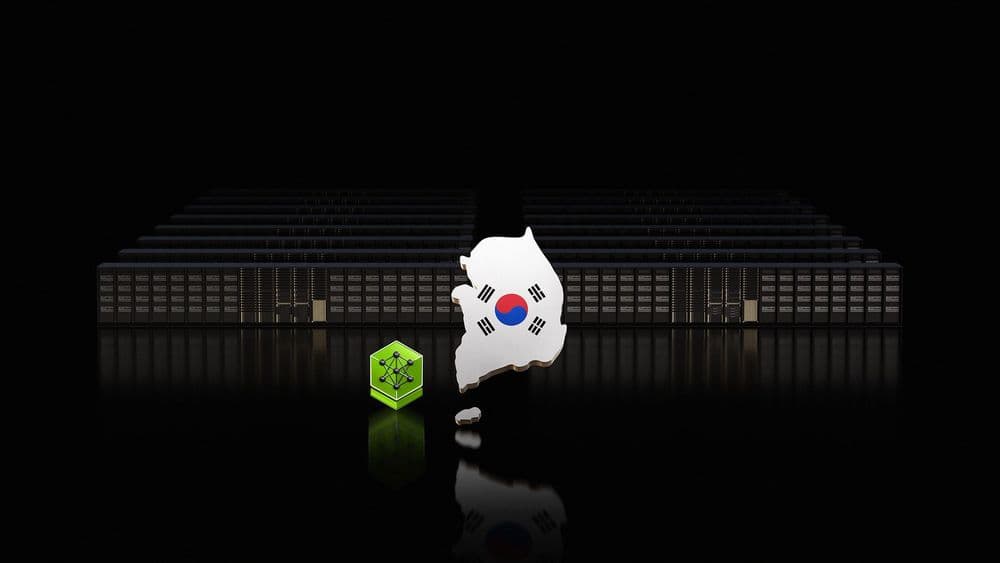
Nvidia CEO Jensen Huang is visiting South Korea for the first time in fifteen years to unveil new plans and deepen collaboration with major Korean tech companies - including Hyundai Motor, Samsung, SK, and Naver. During this week’s APEC Summit 2025, Nvidia and the South Korean government announced an expanded partnership to boost the country’s AI infrastructure and physical AI capabilities. The move underscores South Korea’s intent to be a global hub for advanced computing, model development, and AI-enabled manufacturing.
The announcement comes just days after the U.S. signed technology deals with Japan and South Korea, aiming to deepen strategic ties and accelerate collaboration on emerging technologies, including AI, semiconductors, quantum computing, biotech, and 6G. For Seoul, coupling government investment with private-sector execution is meant to shorten deployment timelines and reduce the cost of scaling AI from lab pilots to production systems.
South Korea will secure over 260,000 of Nvidia’s latest GPUs to meet growing AI demands, the government announced on Friday. About 50,000 GPUs will support public initiatives, including domestic foundation model development and a national AI data center. More than 200,000 GPUs will go to companies such as Samsung, SK, Hyundai Motor Group, and Naver, aimed at accelerating AI-based manufacturing innovation, industry-specific models, and safer, more efficient operations across factories, logistics, and mobility.
Nvidia, Samsung team up on AI factory and AI-RAN for 6G
Samsung announced plans to build an AI Megafactory in partnership with Nvidia, bringing AI into every stage of manufacturing for semiconductors, mobile devices, and robotics. Using 50,000+ Nvidia GPUs and the Omniverseplatform, the facility will create an intelligent network capable of analyzing, predicting, and optimizing production in real time, from yield management to equipment maintenance. Samsung and Nvidia - partners for over 25 years - are also collaborating on HBM4, next-generation memory designed to power future AI applications by increasing bandwidth while improving energy efficiency per token of compute.
Nvidia will work with Samsung, SK Telecom, KT, and LG Uplus, as well as ETRI (Electronics and Telecommunications Research Institute), to co-develop AI-RAN. By fusing AI with radio access networks, AI-RAN aims to boost performance, cut power consumption, and make RAN orchestration more adaptive. Under a new agreement, Nvidia and South Korea’s industry and research institutions will jointly develop next-generation AI-RAN and a global testbed, enabling vendors and operators to validate models, radios, and edge accelerators under real-world traffic.
As Korea scales AI into networks, vehicles, and factories, decentralized AIbecomes a practical necessity rather than a buzzword. Distributing models across edge servers, base stations, and on-device accelerators reduces latency for time-critical tasks (like autonomous driving and robotics), lowers backhaul costs, and helps protect sensitive industrial data through federated learning and privacy-preserving techniques. Initiatives like AI-RAN and Samsung’s AI Megafactory lay the groundwork for a hybrid architecture in which foundational models are trained centrally on clusters of Nvidia GPUs, then distilled and deployed to the edge for real-time inference - with updates flowing both ways as sites contribute local insights to improve system-wide intelligence.
Hyundai drives future mobility with AI factory
Meanwhile, Hyundai and Nvidia are joining forces to build AI infrastructure and advance technologies in physical AI. The partnership will focus on autonomous mobility, smart factories, and robotics, while collaborating on high-performance GPU supply and investment. According to Nvidia, the companies will use 50,000 NVIDIA Blackwell GPUs for integrated training, validation, and deployment, and will establish AI research centers in South Korea to strengthen the country’s physical AI industry.
“AI is revolutionizing every facet of every industry, and in transportation alone — from vehicle design and manufacturing to robotics and autonomous driving - Nvidia’s AI and computing platforms are transforming how the world moves,” said Huang. “Together with Hyundai Motor Group - Korea’s industrial powerhouse and one of the world’s top mobility solutions providers - we’re building intelligent cars and factories that will shape the future of the multitrillion-dollar mobility industry.” The emphasis is on compressing development cycles from months to weeks, validating perception and planning stacks in rich digital twins, and deploying updates safely across global fleets.
SK builds AI cloud, Naver partners on physical AI
SK Group, parent of SK Hynix, is partnering with Nvidia to build Asia’s first enterprise-led manufacturing AI cloud, leveraging Nvidia’s simulation and digital twin platforms. They plans to open access to government, public institutions, and startups, creating a shared backbone for high-fidelity simulations, process optimization, and next-gen chip development. By pooling compute and toolchains, SK aims to reduce time-to-value for industrial AI while improving model reproducibility and governance.
Naver Cloud, the cloud arm of Korean search giant Naver, is collaborating with Nvidia to develop a next-generation Physical AI platform that connects the physical and digital worlds. The company intends to deploy AI infrastructure across semiconductors, shipbuilding, energy, and biotech, accelerating adoption of AI solutions optimized for real-world industrial environments. “Just as the automotive industry is transitioning to SDVs, the era of ‘Physical AI,’ where AI operates directly within real industrial sites and systems, is unfolding,” said Hae-jin Lee, Naver’s founder. For Korea’s export industries, the goal is to push AI beyond dashboards into line-side decision-making, with safety, explainability, and uptime treated as first-class requirements.
Nvidia’s collaborations with Korean big tech - from Samsung’s AI network initiatives to Hyundai’s software-defined vehicles, SK Group’s industrial AI, and Naver’s cloud and AI services - highlight a broader shift: the fusion of AI and hardware across industries. These partnerships show how global leaders are industrializing AI, building from GPU-rich data centers outward to edge sites and devices to shape the next generation of intelligent systems.
Earlier this week, the U.S. tech giant announced a wave of new partnerships with companies including Eli Lilly, Palantir, Hyundai, Samsung, Uber, and Joby Aviation, along with the U.S. Department of Energy, as CEO Jensen Huang sought to downplay concerns about an AI bubble. The news sent its stock soaring, as Nvidia became the first publicly traded company to surpass a $5 trillion market capitalization.