OpenAI launches ChatGPT Pulse to write your morning brief
OpenAI is rolling out a new feature inside ChatGPT that generates personalized morning reports while you sleep. Instead of waiting for prompts, Pulse proactively delivers five to ten concise briefs to get you up to speed-nudging you to check ChatGPT first thing, like you might a news app or social feed.
What Pulse is and why it matters?
Pulse reflects a broader shift in OpenAI’s consumer products: from reactive chat to proactive assistance. Similar to tools like ChatGPT Agent and Codex, Pulse aims to make ChatGPT feel less like a chatbot and more like a hands-on assistant that does work for you in the background.
“We’re building AI that lets us take the level of support that only the wealthiest have been able to afford and make it available to everyone over time,” said Fidji Simo, OpenAI’s new CEO of Applications. “ChatGPT Pulse is the first step in that direction—starting with Pro users today, with a goal of rolling out to all.”
Pricing & availability of Pulse
- Available now for $200/month Pro subscribers as a new tab in the ChatGPT app.
- OpenAI says Plus users will get access later, once efficiency improves.
- Some of ChatGPT’s new compute-intensive features (including Pulse) are limited to higher-tier plans, a constraint tied to server capacity as OpenAI scales data centers with partners like Oracle and SoftBank.
What you get each morning
Pulse can deliver:
- Topical news roundups (e.g., updates on your favorite sports team).
- Personalized briefs based on your context and preferences.
In a demo, product lead Adam Fry showed examples like a news digest on Arsenal, group Halloween costume ideas, and a toddler-friendly Sedona itinerary.
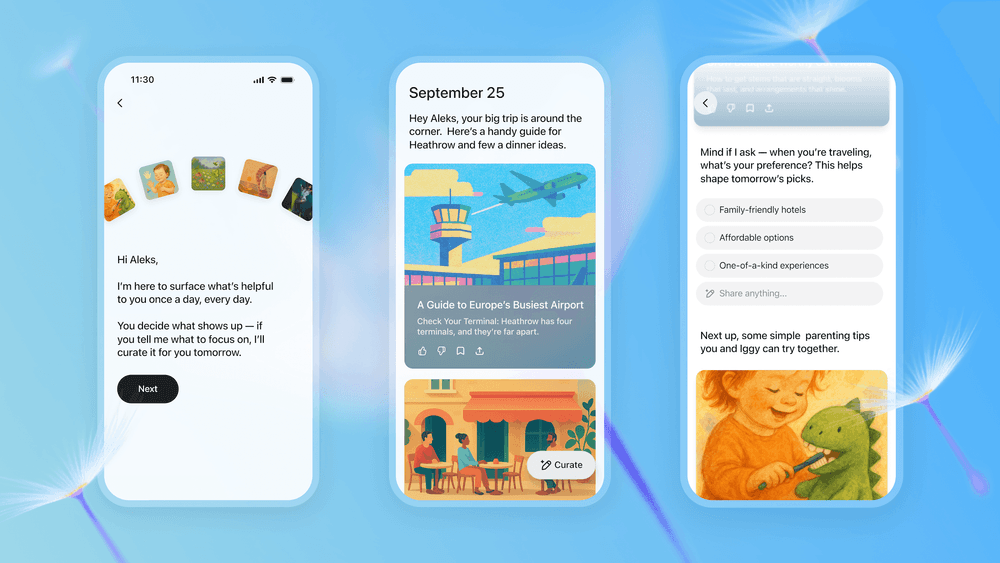
Each brief appears as a card with AI-generated images and summary text. Tap a card to open the full report, then chat with ChatGPT to go deeper, refine, or ask follow-ups. You can also request new reports or give feedback to shape future briefs.
Learn more about ChatGPT Pulse here
Designed to end, not to endless-scroll
A core design choice: after a few reports, Pulse says “Great, that’s it for today.”This intentional stop is meant to avoid engagement traps common in social apps and protect your time.
Connectors & memory: getting truly personal
Pulse works with ChatGPT Connectors like Google Calendar and Gmail:
- Email triage: Parse your inbox overnight and surface the most important messages.
- Calendar planning: Build a day agenda or prep for upcoming events.
If ChatGPT memory is enabled, Pulse can draw on prior chats. OpenAI’s personalization lead Christina Wadsworth Kaplan shared that Pulse learned she loves running, so it generated a London itinerary with running routes. As a pescatarian, she also gets menu picks aligned to her diet when dinner reservations are on the calendar.
Will Pulse replace news apps?
It links to sources (like ChatGPT Search) and isn’t pitched as a full replacement for Apple News, newsletters, or traditional outlets. Still, it’s easy to see how morning briefs could compete for attention with existing news products.
The compute question
Is it worth the compute it consumes? It varies a lot by task: some briefs are light; others require web searches and document synthesis, which are heavier. That variability is one reason Pulse is rolling out first to the top-tier plan.
What’s next
OpenAI ultimately wants Pulse to become more agentic-think: making restaurant reservations, or drafting emails for approval. Those steps will take time and depend on trusted agentic models that users are comfortable delegating to.