Chutes and OpenClaw Integration - What Is ParaClaw?
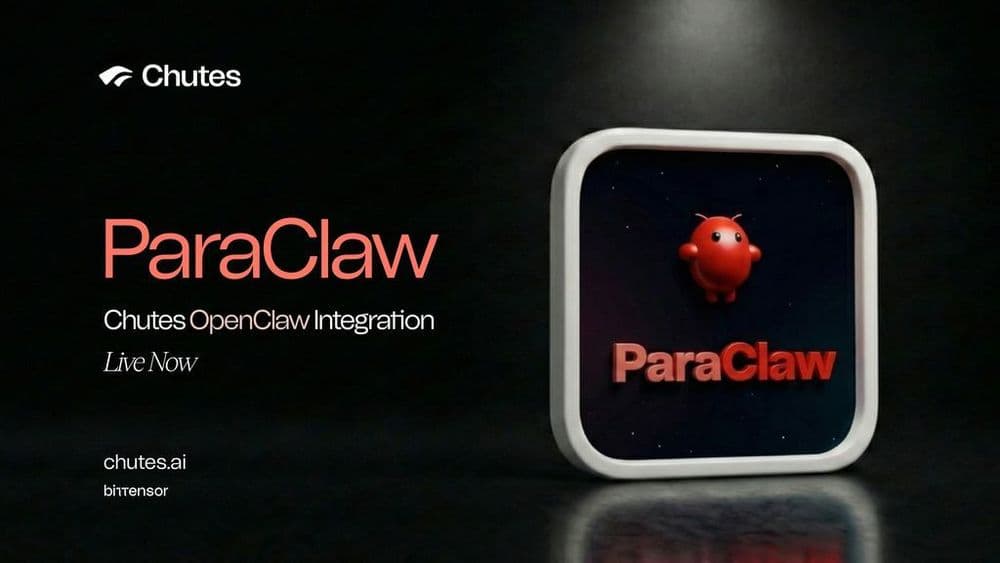
Chutes has unveiled ParaClaw, a new integration layer designed to dramatically simplify how developers deploy and scale autonomous AI agents with OpenClaw. The announcement, shared on X, positions ParaClaw as a one-command setup that connects OpenClaw to a wide catalog of open source models while reducing operational costs compared to traditional closed-source APIs.
At the core of the update is simplicity. Instead of juggling multiple API keys, configuring providers manually, or managing complex deployment scripts, users can initialize their environment through a single curl command. In less than a minute, developers gain access to more than 60 open source models, including DeepSeek, Qwen3.5, GLM-5, and Kimi K2.5. The integration effectively streamlines the process of pairing Chutes infrastructure with OpenClaw agents, removing friction that typically slows down experimentation and production rollouts.
Cost reduction is a central theme. Many teams currently run OpenClaw agents on premium proprietary APIs, where token pricing can scale quickly. ParaClaw shifts that dynamic by enabling access to frontier-scale open models at significantly lower rates. According to the announcement, this setup can reduce spending by more than 90 percent compared to some closed-source providers. For companies running high-frequency agent workflows or long-context reasoning pipelines, that difference can materially impact budgets.
Why ParaClaw Matters for Autonomous AI Infrastructure?
Beyond convenience and pricing, the integration emphasizes privacy and security. Chutes supports Trusted Execution Environments (TEE), a hardware-based isolation mechanism that protects data during inference. With TEE-enabled models, even GPU operators cannot access prompts or processed data while workloads are running. This is particularly relevant for agents handling sensitive information such as internal emails, documents, or enterprise knowledge bases.
Performance is another key factor. Kimi K2.5, described as a 1-trillion-parameter open source model with native multimodal capabilities and Agent Swarm support, is highlighted as outperforming proprietary alternatives on agent-focused benchmarks such as BrowseComp and LiveCodeBench. If these claims hold under broader testing, the Chutes deployment model combined with OpenClaw orchestration could present a credible alternative to centralized AI platforms.
The broader implication is strategic. ParaClaw represents a push toward decentralized AI infrastructure, where open source frontier models run with hardware-level privacy guarantees and lower economic barriers. For developers building fully autonomous agents, the integration signals a shift away from renting intelligence through expensive APIs and toward a more open, cost-efficient ecosystem.
Click here for instruction!